
Four astronauts from NASA's Artemis II mission have safely returned to Earth after completing a historic flyby of the moon, marking the first human journey to the moon in over 50 years.

The Artemis II mission has made history as its astronauts journeyed farther from Earth than any humans before, conducting a lunar flyby and observing the moon's far side in unprecedented detail.

From selfies to science, astronauts aboard Orion document life, work and discovery during their historic Moon flyby.

NASA's Artemis II crew offers a rare look at Earth shrinking into space and the Moon coming into view during humanity's return to deep space.
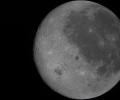
The National Aeronautics and Space Administration (NASA) on Monday said the crew of Artemis II is preparing for a historic lunar flyby that will take humans farther from Earth than ever before.

Seen from Orion, a solar eclipse unfolds in silence -- the Moon crossing the Sun as Earth hangs in the distance.

One of the most striking features in this view is the Orientale Basin, a massive impact crater about 600 miles (965 km) wide.

The mission ferries four astronauts -- NASA's Reid Wiseman, Christina Koch and Victor Glover and Canada's Jeremy Hansen -- onboard the Orion spacecraft for a 10 day lunar flyby. Unlike the Apollo missions that aimed for landing, Artemis II is focused on testing. The crew will evaluate critical systems such as life support, navigation, and communication in deep space -- essential steps before humans can return to the lunar surface.

Lando Norris secured a dominant victory in the Miami Grand Prix sprint race, leading a McLaren one-two finish. Charles Leclerc finished third, while Mercedes faced challenges. The main grand prix is scheduled for Sunday.

The glimpses from NASA's Artemis II mission capture a historic moment -- preparations for humanity's return to the Moon for the first time since the Apollo 17 Moon landing in 1972.
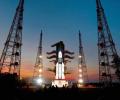
Of the 109 lunar missions during the period, 61 were successful and 48 had failed, it stated.

'The Lunar Reconnaissance Orbiter imaged the area of the targeted Chandrayaan-2 Vikram landing site on October 14 but did not observe any evidence of the lander'

The Orion capsule returns to earth after a 26 day mission orbiting the Moon and back.
NASA's Lunar Reconnaissance Orbiter spacecraft has snapped a series of images during its flyby on September 17 of Vikram's attempted landing sight near the Moon's uncharted south pole.

On October 3, Subramanian, a Chennai-based mechanical engineer, had tagged the Twitter handles of NASA, LRO and ISRO in a tweet, asking, "Is this Vikram lander? (1 km from the landing spot) Lander might have been buried in Lunar sand?"

India, with its demonstrated capabilities of undertaking low cost high value inter-planetary travel, offers great opportunities for NASA to work with.
The Announcement of Opportunity (AO) is for space experiments by institutions in the country, and the last date for receiving the proposals is May 19, 2017, the Bengaluru-headquartered ISRO said.
